I’m Valerie, and I photograph people the way they actually are – not the way they’ve been told to be.
If you really knew me, you’d know I’m not interested in surface-level anything.
I don’t do forced smiles or “say cheese,” and I definitely don’t do the stiff, overcorrected posture people default to when a camera appears like it’s a performance review.
And I don’t bother telling people to “just be yourself.”
If it were that easy, half of us wouldn’t spend years trying to remember who that even is.
What I do is simple:
I make a space where whatever version of you walked in the door is welcome.
Awkward? Fine.
Unsure? Also fine.
Trying not to overthink it? Same.
Thinking about turning around and leaving? Happens more often than you’d think.
The point isn’t to make you comfortable –
it’s to make you real.
Real people breathe differently.
Real people settle differently.
Real people show up with contradictions, histories, and humanity.
That’s who I photograph.
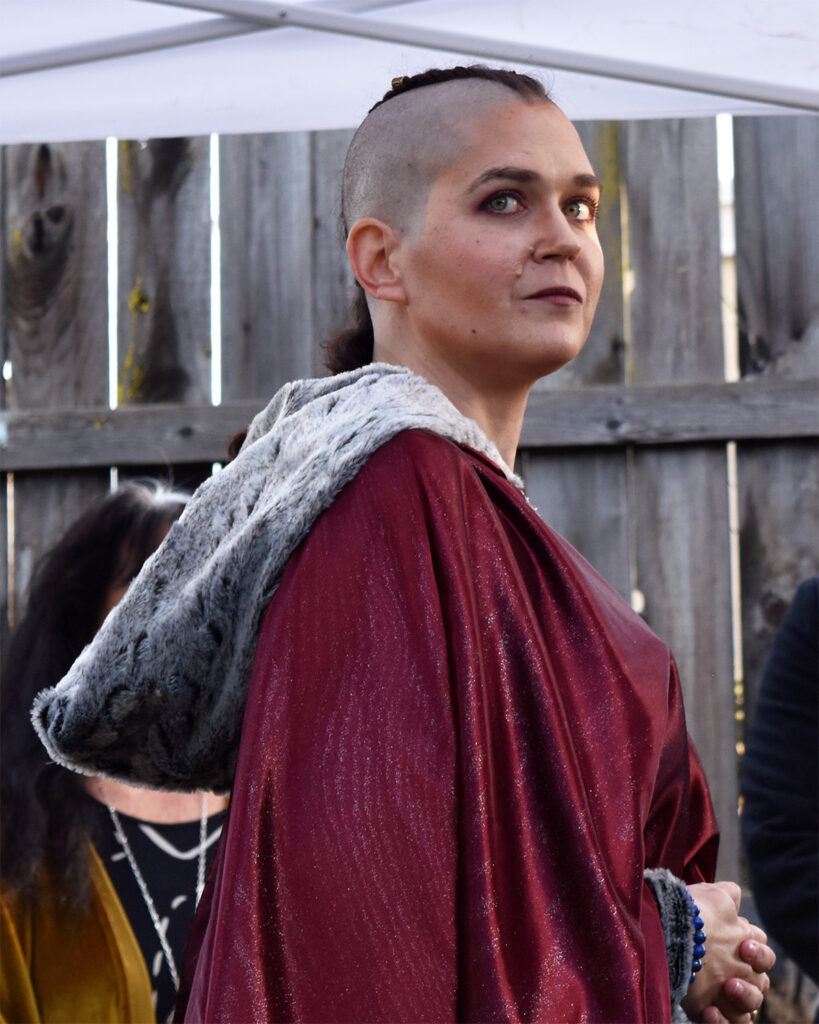
I didn’t start out wanting to “capture moments.” I started out needing to see truth.
Photography found me when I was 13 – right after my grandmother died, when I was the youngest kid thrown into public high school, when the world felt unstable and loud and too much.
The darkroom made sense to me in a way life didn’t.
Light in → truth out.
Straightforward.
Predictable.
Honest
I learned on film, not digital.
I learned how to build images from scratch – chemicals, enlargers, filters, the slow process of turning light into something you can hold.
And when I made a print that my teacher said had “Ansel Adams snow,” it was the first time I saw proof that I was good at something – not because someone told me, but because the truth showed up on the paper.
Photography gave me worth in a house where worth was hard to come by.
So yeah – it meant something.
And then – as life does – it took me away from it for a while.
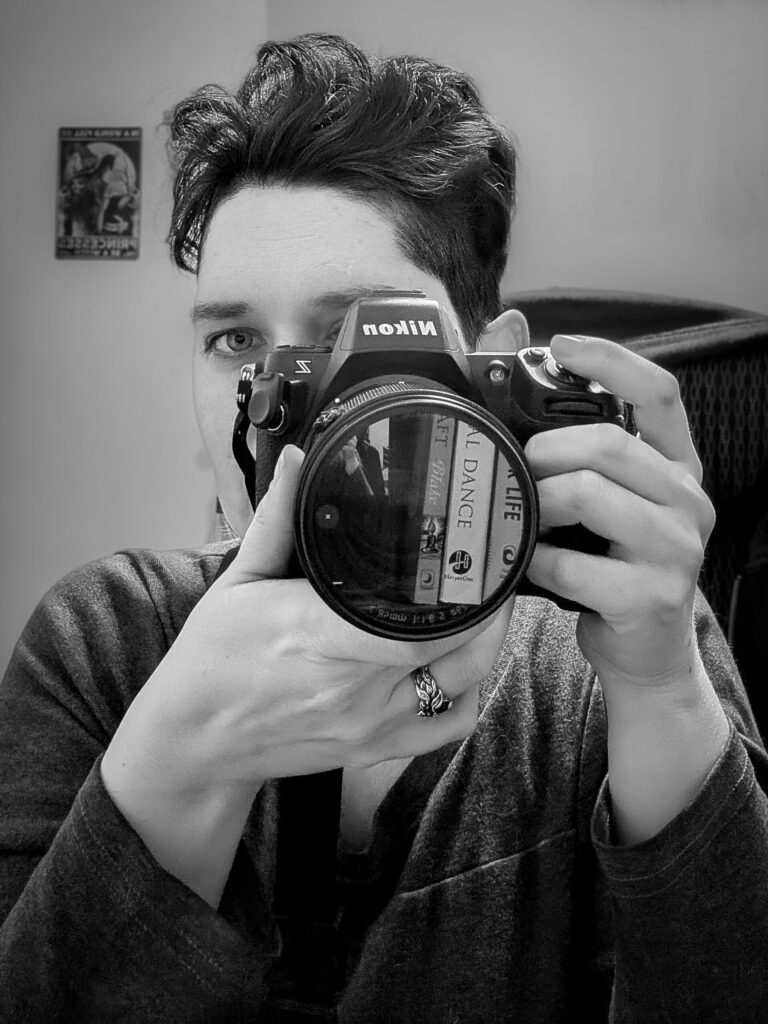
I lost photography to trauma. Then it found me again.
Years later, I won a Canon R100 in a work raffle – the kind of camera that tries its best but doesn’t promise much. It sat in my office for almost a year before I picked it up again.
When I finally did, everything slid into place so quickly it felt like stepping onto a downhill slope. No warning, no traction – just the clear sense that something bigger than me had grabbed the wheel.
Two weeks later, I had already outgrown the camera.
Shortly after, I ended up with the Nikon Z8 – a camera that doesn’t sugarcoat anything. You either have the eye or you don’t.
Turns out I still did.
Photography became healing – not because I healed, but because I stopped pretending I didn’t need it.
Picture-making keeps me connected to the truth of people — their complexity, their tenderness, the light they carry even when they don’t notice it.
Every time I photograph someone else’s light, a piece of mine reflects back.
Not metaphorically. Literally.
Photography is just light telling the truth about what it touches.
I never forgot that.
Who I am outside the lens matters too.
Before I’m a photographer, I’m a whole human with a life that’s equal parts chaotic, grounded, witchy, and unintentionally hilarious.
Yes, I’m witchy as fuck – not in the “InstaWitch and moon water aesthetic” way, but in the “my magic literally shoved me back onto my path when everything went sideways” way.
My magic is practical. Bossy, even. It’s the part of me that refuses to let me pretend I don’t know who I am.
My son is brilliant, autistic, deeply himself, and unintentionally philosophical in the way only autistic kids can be. He’s into dragons, Minecraft vampires, vigilantes, and niche YouTube series I didn’t know existed until he educated me.
He helps me on shoots sometimes — not because he’s into photography, but because he likes being useful and part of the process.
I’m married to a man my son lovingly calls a tree.

He’s steady, gentle, root-level supportive, and the kind of person animals treat like a Disney princess for absolutely no reason.
He’s also the reason I learned that safety doesn’t have to mean confinement – sometimes it looks like someone standing behind you saying, “Go. I’ve got you.”
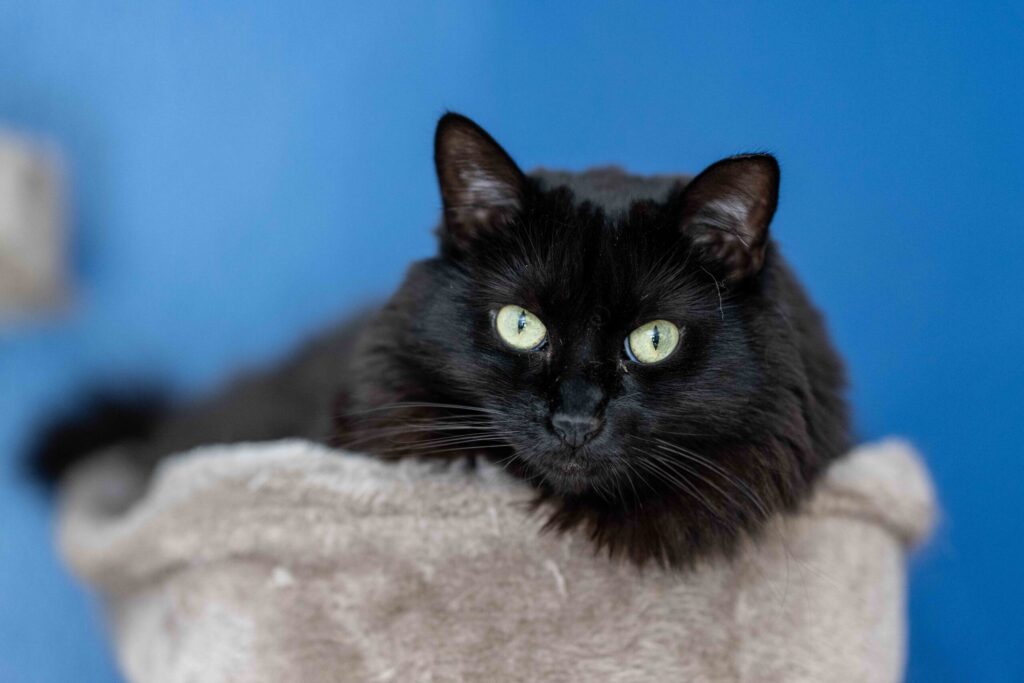
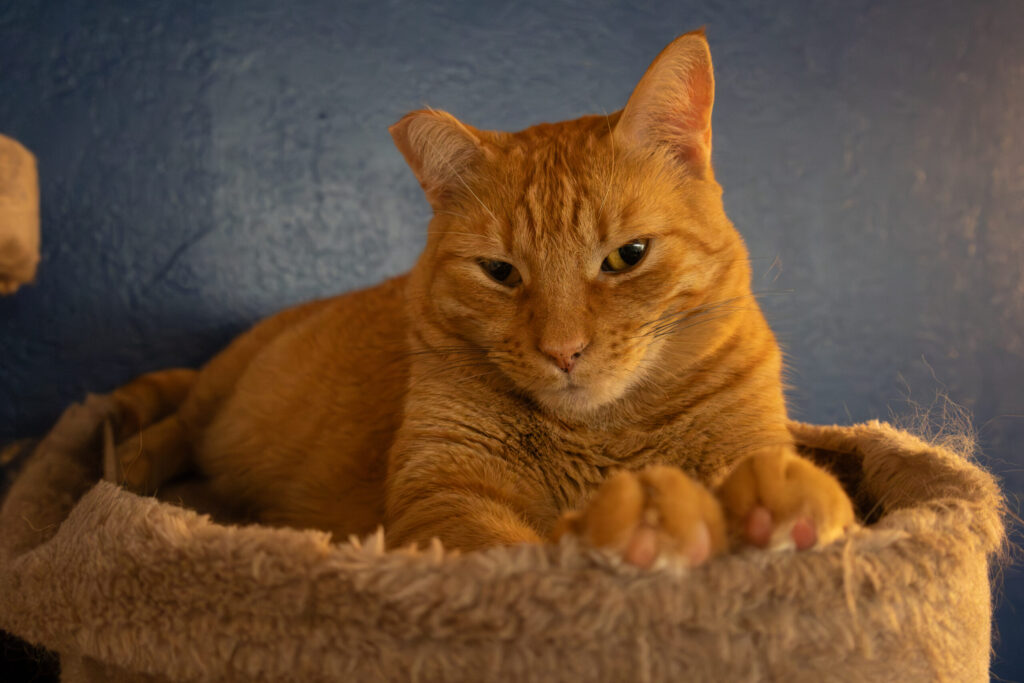
And then… there are the cats.
Three of them. Each unhinged in their own special way.
Moonsheen: once tried to yeet herself off our Christmas tree repeatedly, survived, and now acts like none of us remember.
Snowfall: purrs like a jet engine, drools when she’s pleased, and tries to climb me like a tree when she wants up.
Buddy: orange. Just… orange. The vet literally diagnosed him as “orange.” (You can’t make this shit up.)
These creatures are comedic relief wrapped in fur.
They keep me grounded in ridiculousness, which is important, because the work I do with people tends to go deep – and sometimes you need a drooling cat to reset the energy in your house.
This is the environment I live in:
equal parts sacred, chaotic, grounded, magical, and deeply human.
And it absolutely shapes the way I photograph people.